A teenager in England is facing prosecution for using the word “cult” to describe the Church of Scientology.
The unnamed youth was served the summons by City of London police when he took part in a peaceful demonstration opposite the headquarters of the controversial religion in London.
Officers confiscated a placard with the word “cult” on it from the youth, who is under 18, and a case file has been sent to the Crown Prosecution Service.
Scientology has long been considered a destructive cult. Many experts, and others, (including the German government) consider it to be a commercial venture designed to separate gullible people from their money while masquerading as a religion.
The incident happened during a protest against the Church of Scientology on May 10.
Demonstrators from the anti-Scientology group Anonymous, who were outside the church’s $50m headquarters near St Paul’s Cathedral, were banned from describing Scientology as a cult by police because it was “abusive and insulting”.
Writing on an anti-Scientology website, the teenager facing court said: “I brought a sign to the May 10th protest that said: Scientology is not a religion, it is a dangerous cult.”
“‘Within five minutes of arriving I was told by a member of the police that I was not allowed to use that word, and that the final decision would be made by the inspector.”
A policewoman later read him section five of the Public Order Act and “strongly advised” him to remove the sign.
(Section five of the Public Order Act prohibits signs which have representations or words which are threatening, abusive or insulting.)
The teenager refused to back down quoting a 1984 high court ruling from Mr Justice Latey, in which he described the Church of Scientology as a “cult” which was “corrupt, sinister and dangerous”.
After the exchange, a policewoman handed him a court summons and removed his sign.
On the website he asks for advice on how to fight the charge: “What’s the likelihood I’ll need a lawyer? If I do have to get one, it’ll have to come out of my pocket money.”
Author's note; Speaking from personal experience back in the late sixties I can tell you that Scientology is both immoral and socially obnoxious…
It is corrupt sinister and dangerous.
It is corrupt because it is based on lies and deceit and has its real objective money and power for the Church.
You know, much like the Catholic Church during the "Dark Ages!"
It is sinister because it indulges in infamous practices both to its adherents who do not toe the line unquestionably and to those who criticize it or oppose it.
It is dangerous because it is out to capture people and to indoctrinate and brainwash them so they become the unquestioning captives and tools of the cult, withdrawn from ordinary thought, living, and relationships with others.
Just so you know!
Allan W Janssen is the author of the book The Plain Truth About God (What the mainstream religions don't want you to know!) and is available at the web site www.God-101.com
Visit the blog "Perspective" at http://Allans-Perspective.blogspot.com
Showing posts with label cults. Show all posts
Showing posts with label cults. Show all posts
Tuesday, May 20, 2008


Thursday, May 01, 2008
Must Have Books!
After much debate and argument the "Perspective" research department presents a selection of history's most notable cult writings.
Some are classic. Some are catastrophic. All have the power to inspire!
(Now you have to realize that this is a highly subjective list, but as far as I am concerned these books are a must read for a well rounded education and world view!)
Cult books include some of the most cringe making collections of bilge ever collected between hard covers. But they also include many of the key texts of modern feminism; some of the best journalism and memoirs; some of the most entrancing and original novels in the canon and much more!
Cult books are somehow, intangibly, different from simple bestsellers – though many of them are that. The Carpetbaggers was a bestseller; Zen and The Art of Motorcycle Maintenance was a cult.
They are different from books that have big new ideas – though many of them are that. On The Origin of Species changed history; but Thus Spoke Zarathustra was a cult.
They are different from How-To books – though many of them are that.
The Highway Code is a How-To book; Baby and Child Care was a cult. These are books that became personally important to their readers: that changed the way they lived, or the way they thought about how they lived.
The Bible, the Koran and the Communist Manifesto, of course, changed lives – but, in the first instance, they changed the life of the tribe, not of the individual.
In compiling our list, we were looking for the sort of book that people wear like a leather jacket or carry around like a totem.
The book that rewires your head: that turns you on to psychedelics; makes you want to move to Greece; makes you a pacifist; gives you a way of thinking about yourself as a man or a woman, or a voice in your head that makes it feel okay to be a teenager; conjures into being a character who becomes a permanent inhabitant of your mental flophouse.
These twenty books do this and more. Everyone might not agree with the list but then that is why we have the comments section at the bottom.
Anything we missed or should have included, then by all means let us know!
I promise I won't let the list get over 100 books! -ED.
 Slaughterhouse-Five by Kurt Vonnegut (1969) Sideways fantasy from the Diogenes of American letters, a comic sage who survived the firebombing of Dresden and various familial tragedies to work out his own unique brand of science-fictional satire. Like much of Vonnegut's stuff, this is savage anger barely masked by urbane anthropological sarcasm. Very much the place to start.
 Catch-22 by Joseph Heller (1961) Bitterly bouncy military farce, responsible for inventing the dilemma to which it gave its name: you're only excused war if you're mad, but wanting an exemption argues that you must be sane. Literary history would be entirely different if Heller had followed his original intention and called it Catch-18: it was changed to avoid confusion with a Leon Uris book.
 The Catcher in the Rye by JD Salinger (1951) Ur-text of adolescent alienation, beloved of assassins, emos and everyone in between, Gordon Brown included. Complicated teen Holden Caulfield at large in the big city, working out his family and getting drunk. You've probably read it, be honest.
 The Celestine Prophecy by James Redfield (1993) Deep in the South American jungle an intrepid explorer is about to stumble on a sequence of ancient prophecies that could change our way of living, even save the world. If only we didn’t have to buy the other novels in that the series to find out what they were! For a similar effect on the cheap, rent an Indiana-Jonesalike film – Tomb Raider, say – and ask a hippy to whisper nonsense in your ear while you're watching it.
 Chariots of the Gods: Was God An Astronaut? by Erich Von Däniken (1968) Those Easter Island things, they're blokes wearing space suits, aren’t they? Er, no. Hugely influential work of mad-eyed fabricated Arch & Anth, responsible for decades of pub pseudoscience as well as for splendid stuff such as The X-Files. Increasingly common at jumble sales these days, though Von Däniken happily got another 25 books out of the idea.
 A Clockwork Orange; Anthony Burgess' 1963 classic stands alongside Orwell's 1984 and Huxley's Brave New World as a classic of twentieth century post-industrial alienation, often shocking us into a thoughtful exploration of the meaning of free will and the conflict between good and evil.Told by the central character, Alex, this brilliant, hilarious, and disturbing novel creates an alarming futuristic vision of violence, high technology, and authoritarianism. Recognized as one of the literary geniuses of our time, Anthony Burgess produced thirty-two novels, a volume of verse, sixteen works of nonfiction, and two plays. Originally a composer, his creative output also included countless musical compositions, including symphonies, operas, and jazz. The author's musicality is evident in the lyrical and dramatic reading he gives in this recording. Anthony Burgess died in 1993.
 Dune by Frank Herbert (1965) Sandworms, ornithopters, Atreides, Harkonnen and spice: chop and blend for sci-fi fantasy, strangely like an intergalactic cousin of James Clavell. The first in an increasingly soap-operatic sequence. Equally cultishly adapted for the screen by David Lynch, and the root of many a lifelong passion for complex character names and/or arcane ceremonial weaponry.
 The Hitchhiker’s Guide to the Galaxy by Douglas Adams (1979)Forget Asimov or PKD. Douglas Adams was so brilliant a visionary that even in the late 1970s he was able to foresee a time when digital watches would look pretty silly. The Hitchhiker's Guide To The Galaxy – a radio show before it was a novel, and a film, and a game, and a TV show – was incredibly clever and wildly funny. Thanks to the Guide, an entire generation of Britons was nursed to adulthood with the phrases "Don’t Panic" and "Mostly Harmless", and the number 42.
 The Electric Kool-Aid Acid Test by Tom Wolfe (1968)New journalism, non-fiction novel – however you define it, Tom Wolfe’s 1968 account of the novelist Ken Kesey’s psychedelic bus ride across America with his "Merry Pranksters" established a style of free-associating, hyperbolic writing (count the exclamation marks!!!) that spawned countless imitations. To a generation of readers it fostered a burning envy that they had not been in San Francisco when the Kool-Aid dispensers were being spiked with "Purple Haze". Now a vivid social history of a period that seems as remote as Byzantium.
 Fear of Flying by Erica Jong (1973) More 1970s searching for "authenticity" and "selfhood": a housewife has an affair with a radical psychoanalyst ("Adrian Goodlove", geddit?) and fantasises about sexual liberation. At the end, though, she goes back to her husband. John Updike called it the most "delicious erotic novel a woman ever wrote" – but really, what on earth was all the fuss about?
 Nineteen Eighty-Four (also titled 1984),by George Orwell (the pen name of Eric Arthur Blair), is an English novel about life in a dictatorship as lived by Winston Smith, an intellectual worker at the Ministry of Truth, and his degradation when he runs afoul of the totalitarian government of Oceania, the state in which he lives in the year that he presumes is 1984.
Nineteen Eighty-Four was published in 1949 and has been translated to sixty-two languages. The novel's title, its terms and its language (Newspeak), and its author's surname are bywords for personal privacy lost to national state security. The adjective "Orwellian" denotes totalitarian action and organisation; the phrase: Big Brother is Watching You connotes pervasive, invasive surveillance. The following quotation from the novel has become famous:
War is Peace
Freedom is Slavery
Ignorance is Strength
Although the novel has been banned or challenged in some countries, it is among literature's most famous dystopias. In 2005, Time magazine listed it among the best one hundred English-language novels published since 1923. The novel WE by Yevgeny Zamyatin is considered by some to have been an influence on 1984 and is also a dystopia.
 The Holy Blood and the Holy Grail by Michael Baigent, Richard Leigh and Henry Lincoln (1982) Similar territory to The Da Vinci Code but earlier, less balefully stupid and with the nerve to claim factual accuracy (its authors took Dan Brown to court and lost). The usual song and dance about Templars, bloodlines of Christ and global conspiracies, but somehow still chilling for all that. Staple text of the bonkers brigade.
 Fear and Loathing in Las Vegas by Hunter S Thompson (1971) Needs little introduction. Bad craziness as the Duke of Gonzo and his helpless attorney blaze a streak of pharmaceutical havoc across 1970s California, all in demented bar-fight prose and fever-dream set-pieces. Now also a core text for ex-public school drug bores, which tends to obscure the anarchic excellence of HST's journalistic talent.
 The Prophet by Kahlil Gibran (1923) Pocket-sized set of aphorisms that sound like they were written by a medieval monk but were actually the product of a Lebanese-American alcoholic who died of cirrhosis of the liver in 1931. The Prophet is a beautifully phrased exercise in pointing out the obvious but Sixties hippy kids loved it.
 The Rubáiyát of Omar Khayyám by Edward FitzGerald (1859) This is among the best-selling volumes of poetry of all time, and does all that a translation should: it introduces the idea of an exotic, different culture; and it expresses what its readers feel, but lets them blame it on someone else. Here, in an age of doubt, aesthetics and Darwinism, these mysterious verses, drawn from 11th-century Persian, stand as little examples of how to celebrate life even as it slips away.
 Fahrenheit 451; The novel presents a future in which all books are restricted, individuals are anti-social and hedonistic, and critical thought is suppressed. The central character, Guy Montag, is employed as a "fireman" (which, in this future, means "book burner"). The number "451" refers to the temperature (in Fahrenheit) at which a book or paper autoignites. Over the years, the novel has been subject to various interpretations, primarily focusing on the historical role of book burning in suppressing dissenting ideas. Bradbury has stated that the novel is not about censorship; he states that Fahrenheit 451 is a story about how television destroys interest in reading literature, which ultimately leads to ignorance of total facts.
 The Teachings of Don Juan: a Yaqui Way of Knowledge by Carlos Castaneda (1968) Take an enterprising anthropology student (Castaneda) and a Mexican shaman (Don Juan), mix in liberal quantities of peyote, and you end up with a text rooted in "nonordinary reality". Castaneda's multi-part account of his adventures, which started to appear in 1968, and includes lessons in how to fly and talk to coyotes, has always elicited queries as to its veracity. But when you’ve taken that many drugs, it may not matter.
 Animal Farm; The only guy to make this list twice, Orwell's novel is an allegory in which animals play the roles of the Bolshevik revolutionaries and overthrow and oust the human owners of the farm, setting it up as a commune in which, at first, all animals are equal; class and status disparities soon emerge, however, between the different animal species. The novel describes how a society's ideologies can be manipulated and twisted by individuals in positions of social and political power, including how a utopian society is made impossible by the corrupting nature of the very power necessary to create it.
 Brave New World; Although the novel is set in the future, it contains contemporary issues of the early 20th century. The Industrial Revolution was bringing about massive changes to the world. Mass production had made cars, telephones and radios relatively cheap and widely available throughout the developed world. The Russian Revolution of 1917 and the first World War (1914–1918) were resonating throughout the world.
Huxley was able to use the setting and characters from his futuristic fantasy to express widely held opinions, particularly the fear of losing individual identity in the fast-paced world of the future. An early trip to the United States gave Brave New World much of its character. Not only was Huxley outraged by the culture of youth, commercial cheeriness and inward-looking nature of many Americans,[2] he also found a book by Henry Ford on the boat to America. There was a fear of Americanisation in Europe, so to see America firsthand, as well as read the ideas and plans of one of its foremost citizens, spurred Huxley to write Brave New World with America in mind. The "feelies" are his response to the "talkie" motion pictures, and the sex-hormone chewing gum is parody of the ubiquitous chewing gum, which was something of a symbol of America at that time. In an article in the May 4, 1935 issue of Illustrated London News, G. K. Chesterton explained that Huxley was revolting against the "Age of Utopias" - a time, mostly before World War I, inspired by what H. G. Wells and George Bernard Shaw were writing about socialism and a World State.
 Zen and the Art of Motorcycle Maintenance: an Inquiry into Values by Robert M Pirsig (1974) Burnt-out hippy takes son on bike trip. Remembers previous self: lecturer who had nervous breakdown contemplating Eastern and Western philosophy. Very bad course in Ordinary General Philosophy follows. If he’d done Greek at school and knew what "arête" meant, we could have been spared most of the 1970s.
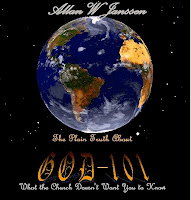 You will notice that despite great temptation I did not include my book "The Plain Truth About God" (What the church doesn't want you to know!)in this list. Now that's what I call restraint!!!
Allan W Janssen is the author of the book The Plain Truth About God (What the mainstream religions don't want you to know!) and is available at the web site www.God-101.com
Visit the blog "Perspective" at http://Allans-Perspective.blogspot.com
Some are classic. Some are catastrophic. All have the power to inspire!
(Now you have to realize that this is a highly subjective list, but as far as I am concerned these books are a must read for a well rounded education and world view!)
Cult books include some of the most cringe making collections of bilge ever collected between hard covers. But they also include many of the key texts of modern feminism; some of the best journalism and memoirs; some of the most entrancing and original novels in the canon and much more!
Cult books are somehow, intangibly, different from simple bestsellers – though many of them are that. The Carpetbaggers was a bestseller; Zen and The Art of Motorcycle Maintenance was a cult.
They are different from books that have big new ideas – though many of them are that. On The Origin of Species changed history; but Thus Spoke Zarathustra was a cult.
They are different from How-To books – though many of them are that.
The Highway Code is a How-To book; Baby and Child Care was a cult. These are books that became personally important to their readers: that changed the way they lived, or the way they thought about how they lived.
The Bible, the Koran and the Communist Manifesto, of course, changed lives – but, in the first instance, they changed the life of the tribe, not of the individual.
In compiling our list, we were looking for the sort of book that people wear like a leather jacket or carry around like a totem.
The book that rewires your head: that turns you on to psychedelics; makes you want to move to Greece; makes you a pacifist; gives you a way of thinking about yourself as a man or a woman, or a voice in your head that makes it feel okay to be a teenager; conjures into being a character who becomes a permanent inhabitant of your mental flophouse.
These twenty books do this and more. Everyone might not agree with the list but then that is why we have the comments section at the bottom.
Anything we missed or should have included, then by all means let us know!
I promise I won't let the list get over 100 books! -ED.
 Slaughterhouse-Five by Kurt Vonnegut (1969) Sideways fantasy from the Diogenes of American letters, a comic sage who survived the firebombing of Dresden and various familial tragedies to work out his own unique brand of science-fictional satire. Like much of Vonnegut's stuff, this is savage anger barely masked by urbane anthropological sarcasm. Very much the place to start.
 Catch-22 by Joseph Heller (1961) Bitterly bouncy military farce, responsible for inventing the dilemma to which it gave its name: you're only excused war if you're mad, but wanting an exemption argues that you must be sane. Literary history would be entirely different if Heller had followed his original intention and called it Catch-18: it was changed to avoid confusion with a Leon Uris book.
 The Catcher in the Rye by JD Salinger (1951) Ur-text of adolescent alienation, beloved of assassins, emos and everyone in between, Gordon Brown included. Complicated teen Holden Caulfield at large in the big city, working out his family and getting drunk. You've probably read it, be honest.
 The Celestine Prophecy by James Redfield (1993) Deep in the South American jungle an intrepid explorer is about to stumble on a sequence of ancient prophecies that could change our way of living, even save the world. If only we didn’t have to buy the other novels in that the series to find out what they were! For a similar effect on the cheap, rent an Indiana-Jonesalike film – Tomb Raider, say – and ask a hippy to whisper nonsense in your ear while you're watching it.
 Chariots of the Gods: Was God An Astronaut? by Erich Von Däniken (1968) Those Easter Island things, they're blokes wearing space suits, aren’t they? Er, no. Hugely influential work of mad-eyed fabricated Arch & Anth, responsible for decades of pub pseudoscience as well as for splendid stuff such as The X-Files. Increasingly common at jumble sales these days, though Von Däniken happily got another 25 books out of the idea.
 A Clockwork Orange; Anthony Burgess' 1963 classic stands alongside Orwell's 1984 and Huxley's Brave New World as a classic of twentieth century post-industrial alienation, often shocking us into a thoughtful exploration of the meaning of free will and the conflict between good and evil.Told by the central character, Alex, this brilliant, hilarious, and disturbing novel creates an alarming futuristic vision of violence, high technology, and authoritarianism. Recognized as one of the literary geniuses of our time, Anthony Burgess produced thirty-two novels, a volume of verse, sixteen works of nonfiction, and two plays. Originally a composer, his creative output also included countless musical compositions, including symphonies, operas, and jazz. The author's musicality is evident in the lyrical and dramatic reading he gives in this recording. Anthony Burgess died in 1993.
 Dune by Frank Herbert (1965) Sandworms, ornithopters, Atreides, Harkonnen and spice: chop and blend for sci-fi fantasy, strangely like an intergalactic cousin of James Clavell. The first in an increasingly soap-operatic sequence. Equally cultishly adapted for the screen by David Lynch, and the root of many a lifelong passion for complex character names and/or arcane ceremonial weaponry.
 The Hitchhiker’s Guide to the Galaxy by Douglas Adams (1979)Forget Asimov or PKD. Douglas Adams was so brilliant a visionary that even in the late 1970s he was able to foresee a time when digital watches would look pretty silly. The Hitchhiker's Guide To The Galaxy – a radio show before it was a novel, and a film, and a game, and a TV show – was incredibly clever and wildly funny. Thanks to the Guide, an entire generation of Britons was nursed to adulthood with the phrases "Don’t Panic" and "Mostly Harmless", and the number 42.
 The Electric Kool-Aid Acid Test by Tom Wolfe (1968)New journalism, non-fiction novel – however you define it, Tom Wolfe’s 1968 account of the novelist Ken Kesey’s psychedelic bus ride across America with his "Merry Pranksters" established a style of free-associating, hyperbolic writing (count the exclamation marks!!!) that spawned countless imitations. To a generation of readers it fostered a burning envy that they had not been in San Francisco when the Kool-Aid dispensers were being spiked with "Purple Haze". Now a vivid social history of a period that seems as remote as Byzantium.
 Fear of Flying by Erica Jong (1973) More 1970s searching for "authenticity" and "selfhood": a housewife has an affair with a radical psychoanalyst ("Adrian Goodlove", geddit?) and fantasises about sexual liberation. At the end, though, she goes back to her husband. John Updike called it the most "delicious erotic novel a woman ever wrote" – but really, what on earth was all the fuss about?
 Nineteen Eighty-Four (also titled 1984),by George Orwell (the pen name of Eric Arthur Blair), is an English novel about life in a dictatorship as lived by Winston Smith, an intellectual worker at the Ministry of Truth, and his degradation when he runs afoul of the totalitarian government of Oceania, the state in which he lives in the year that he presumes is 1984.
Nineteen Eighty-Four was published in 1949 and has been translated to sixty-two languages. The novel's title, its terms and its language (Newspeak), and its author's surname are bywords for personal privacy lost to national state security. The adjective "Orwellian" denotes totalitarian action and organisation; the phrase: Big Brother is Watching You connotes pervasive, invasive surveillance. The following quotation from the novel has become famous:
War is Peace
Freedom is Slavery
Ignorance is Strength
Although the novel has been banned or challenged in some countries, it is among literature's most famous dystopias. In 2005, Time magazine listed it among the best one hundred English-language novels published since 1923. The novel WE by Yevgeny Zamyatin is considered by some to have been an influence on 1984 and is also a dystopia.
 The Holy Blood and the Holy Grail by Michael Baigent, Richard Leigh and Henry Lincoln (1982) Similar territory to The Da Vinci Code but earlier, less balefully stupid and with the nerve to claim factual accuracy (its authors took Dan Brown to court and lost). The usual song and dance about Templars, bloodlines of Christ and global conspiracies, but somehow still chilling for all that. Staple text of the bonkers brigade.
 Fear and Loathing in Las Vegas by Hunter S Thompson (1971) Needs little introduction. Bad craziness as the Duke of Gonzo and his helpless attorney blaze a streak of pharmaceutical havoc across 1970s California, all in demented bar-fight prose and fever-dream set-pieces. Now also a core text for ex-public school drug bores, which tends to obscure the anarchic excellence of HST's journalistic talent.
 The Prophet by Kahlil Gibran (1923) Pocket-sized set of aphorisms that sound like they were written by a medieval monk but were actually the product of a Lebanese-American alcoholic who died of cirrhosis of the liver in 1931. The Prophet is a beautifully phrased exercise in pointing out the obvious but Sixties hippy kids loved it.
 The Rubáiyát of Omar Khayyám by Edward FitzGerald (1859) This is among the best-selling volumes of poetry of all time, and does all that a translation should: it introduces the idea of an exotic, different culture; and it expresses what its readers feel, but lets them blame it on someone else. Here, in an age of doubt, aesthetics and Darwinism, these mysterious verses, drawn from 11th-century Persian, stand as little examples of how to celebrate life even as it slips away.
 Fahrenheit 451; The novel presents a future in which all books are restricted, individuals are anti-social and hedonistic, and critical thought is suppressed. The central character, Guy Montag, is employed as a "fireman" (which, in this future, means "book burner"). The number "451" refers to the temperature (in Fahrenheit) at which a book or paper autoignites. Over the years, the novel has been subject to various interpretations, primarily focusing on the historical role of book burning in suppressing dissenting ideas. Bradbury has stated that the novel is not about censorship; he states that Fahrenheit 451 is a story about how television destroys interest in reading literature, which ultimately leads to ignorance of total facts.
 The Teachings of Don Juan: a Yaqui Way of Knowledge by Carlos Castaneda (1968) Take an enterprising anthropology student (Castaneda) and a Mexican shaman (Don Juan), mix in liberal quantities of peyote, and you end up with a text rooted in "nonordinary reality". Castaneda's multi-part account of his adventures, which started to appear in 1968, and includes lessons in how to fly and talk to coyotes, has always elicited queries as to its veracity. But when you’ve taken that many drugs, it may not matter.
 Animal Farm; The only guy to make this list twice, Orwell's novel is an allegory in which animals play the roles of the Bolshevik revolutionaries and overthrow and oust the human owners of the farm, setting it up as a commune in which, at first, all animals are equal; class and status disparities soon emerge, however, between the different animal species. The novel describes how a society's ideologies can be manipulated and twisted by individuals in positions of social and political power, including how a utopian society is made impossible by the corrupting nature of the very power necessary to create it.
 Brave New World; Although the novel is set in the future, it contains contemporary issues of the early 20th century. The Industrial Revolution was bringing about massive changes to the world. Mass production had made cars, telephones and radios relatively cheap and widely available throughout the developed world. The Russian Revolution of 1917 and the first World War (1914–1918) were resonating throughout the world.
Huxley was able to use the setting and characters from his futuristic fantasy to express widely held opinions, particularly the fear of losing individual identity in the fast-paced world of the future. An early trip to the United States gave Brave New World much of its character. Not only was Huxley outraged by the culture of youth, commercial cheeriness and inward-looking nature of many Americans,[2] he also found a book by Henry Ford on the boat to America. There was a fear of Americanisation in Europe, so to see America firsthand, as well as read the ideas and plans of one of its foremost citizens, spurred Huxley to write Brave New World with America in mind. The "feelies" are his response to the "talkie" motion pictures, and the sex-hormone chewing gum is parody of the ubiquitous chewing gum, which was something of a symbol of America at that time. In an article in the May 4, 1935 issue of Illustrated London News, G. K. Chesterton explained that Huxley was revolting against the "Age of Utopias" - a time, mostly before World War I, inspired by what H. G. Wells and George Bernard Shaw were writing about socialism and a World State.
 Zen and the Art of Motorcycle Maintenance: an Inquiry into Values by Robert M Pirsig (1974) Burnt-out hippy takes son on bike trip. Remembers previous self: lecturer who had nervous breakdown contemplating Eastern and Western philosophy. Very bad course in Ordinary General Philosophy follows. If he’d done Greek at school and knew what "arête" meant, we could have been spared most of the 1970s.
 You will notice that despite great temptation I did not include my book "The Plain Truth About God" (What the church doesn't want you to know!)in this list. Now that's what I call restraint!!!
Allan W Janssen is the author of the book The Plain Truth About God (What the mainstream religions don't want you to know!) and is available at the web site www.God-101.com
Visit the blog "Perspective" at http://Allans-Perspective.blogspot.com
Monday, August 13, 2007
If you're gonna jump.... jump! Don't talk about it!
This is what I like to see!
If you're going to believe stupid stuff about religion that other humans made up then at least do it whole hog and jump in with both feet!
Never mind this mamby-pamby shit like "Jesus died for our sins," or "Muhammad wants us to either convert or kill all the infidels!"
Don't get sidetracked by trying to attain "enlightenment" or the "Ten Perfections," or even "Nirvana" (that's Vanna White's sister.)
No my friends, if your going to fuck yourself up on superstition then by all means jump into the deep end.
Do you remember that saying from my book "The plain truth about God," where the guy says; "I was all fucked-up on drugs until I found Jesus, now I'm all fucked up on him!"
Well don't just stop there bunky, go one better!!!
You might remember these guys............. hundreds were gathering Monday to study the teachings of the controversial Rael sect, which believes extra-terrestrials created Earth.
The group is seeking sought to expand its base in Japan.
 The sect, founded in France, is best known for saying it cloned a human being in 2002, although it has never produced any evidence to back up its claims.
About 600 followers, including new members, signed up to take part in a week-long Asia seminar of the Rael movement that opened Sunday at a hotel in Narita near Tokyo, said Hideaki Numakura, a spokesman for the group in Japan.
The group’s leader Rael, a Frenchman whose name is Claude Vorilhon, was due to attend but cancelled because of illness and is recovering in Switzerland, group members said.
 Rael, a former auto journalist, started the movement in the 1970s when he said aliens told him that they created humanity. He preaches that human beings should be able to control their own genetic makeup.
In the session here, the sect is teaching followers to attain happiness through controlling the brain — an exercise purportedly similar to Buddhist monks’ meditation.
(When you think about it, that's a deal since most of the mainstream religions want you to give 10%. Christ, that's a three percent discount and you might even get a ride in a flying saucer to boot!)
 Besides Japan, the meditation classes included followers from other parts of Asia including South Korea, China, Thailand, Mongolia, the Philippines and Sri Lanka, group members said.
Some of the new followers said they learned about the Rael movement through the Internet including social network services like Mixi, a Japanese website similar to MySpace.
It's called, "Let's just see how stupid they really are!"
Allan W Janssen is the author of The Plain Truth About God at www.God-101.com
If you're going to believe stupid stuff about religion that other humans made up then at least do it whole hog and jump in with both feet!
Never mind this mamby-pamby shit like "Jesus died for our sins," or "Muhammad wants us to either convert or kill all the infidels!"
Don't get sidetracked by trying to attain "enlightenment" or the "Ten Perfections," or even "Nirvana" (that's Vanna White's sister.)
No my friends, if your going to fuck yourself up on superstition then by all means jump into the deep end.
Do you remember that saying from my book "The plain truth about God," where the guy says; "I was all fucked-up on drugs until I found Jesus, now I'm all fucked up on him!"
Well don't just stop there bunky, go one better!!!
You might remember these guys............. hundreds were gathering Monday to study the teachings of the controversial Rael sect, which believes extra-terrestrials created Earth.
The group is seeking sought to expand its base in Japan.
 The sect, founded in France, is best known for saying it cloned a human being in 2002, although it has never produced any evidence to back up its claims.
About 600 followers, including new members, signed up to take part in a week-long Asia seminar of the Rael movement that opened Sunday at a hotel in Narita near Tokyo, said Hideaki Numakura, a spokesman for the group in Japan.
The group’s leader Rael, a Frenchman whose name is Claude Vorilhon, was due to attend but cancelled because of illness and is recovering in Switzerland, group members said.
 Rael, a former auto journalist, started the movement in the 1970s when he said aliens told him that they created humanity. He preaches that human beings should be able to control their own genetic makeup.
In the session here, the sect is teaching followers to attain happiness through controlling the brain — an exercise purportedly similar to Buddhist monks’ meditation.
“Do not neglect gardening your neural connection, pulling out the bad weeds. If you do, you will become happy,” Michio Ito, the group’s Japanese leader, said as he led a three-minute session.The group says it has 50,000 followers worldwide. Some 10,000 of them are in Asia, including 6,000 in Japan — which has more members than any other country, with France coming second.
Ito said the Japanese are more receptive to the Rael movement because of the openness to different religions in Japan, where most people mix Buddhist and Shinto beliefs.New members are asked to pay seven percent of their salary to the group.
“Japanese don’t really believe in a God; they tend to believe more in scientific facts and evidence so that’s why (the movement) is more accepted here than elsewhere where there is already a religion,” Ito said.
“Japanese are also more open to things like brain-training,” he said.
(When you think about it, that's a deal since most of the mainstream religions want you to give 10%. Christ, that's a three percent discount and you might even get a ride in a flying saucer to boot!)
 Besides Japan, the meditation classes included followers from other parts of Asia including South Korea, China, Thailand, Mongolia, the Philippines and Sri Lanka, group members said.
Some of the new followers said they learned about the Rael movement through the Internet including social network services like Mixi, a Japanese website similar to MySpace.
“I have always been fascinated by the way life is precisely designed. Only advanced intelligent beings could have done this,” said Rael member Yoshihisa Naruse, an assistant professor of anatomy at the Meiji University of Oriental Medicine.Rael, meanwhile, was reported to be re-cooperating at his Villa in the Alps, and reading L. Ron Hubbard's (Scientology) last book, that was published just before he died.
It's called, "Let's just see how stupid they really are!"
Allan W Janssen is the author of The Plain Truth About God at www.God-101.com
Subscribe to:
Posts (Atom)